
Artificial intelligence, for all its promises, is a double-edged sword. We’re not just building machines that can generate poetry or recommend movies — we’re creating systems that influence economies, healthcare, national security, and the very fabric of society. With such immense potential, the risks associated with AI demand serious attention.
A recent International AI Safety Report (2025) provides a comprehensive breakdown of managing AI risks as well as explaining the various aspects of the technology and sector itself in simple, easy to understand language. It lays out mitigation strategies, governance frameworks, and a spectrum of risks — from misuse by bad actors to unintended system failures. The report is great, Nobel Prize laureates have been involved in its creation, however in my humble opinion there is one glaring omission : The military applications of AI. This absence speaks volumes about the elephant in the room.
Let’s dive into the critical takeaways from this report, dissect the risk strategies, and then finish up with why the military’s role in AI development can no longer be ignored.
The Technical Foundations of AI Risk Management
Managing AI risks isn’t as straightforward as adding a few safety checks or writing better code. The report outlines multiple overlapping strategies, inspired by safety-critical industries like aviation and nuclear power. Some of the key approaches include:
1. Defence in Depth: Layers of Safety
This strategy borrows from cybersecurity and nuclear safety, where multiple defensive measures are stacked to reduce the likelihood of catastrophic failure. In AI, this could mean embedding safeguards at different stages of development — restricting model training data, applying real-time monitoring during deployment, and enforcing strict user access controls.
Think of it as a firewall for AI decision-making: if one barrier fails, another is there to catch it.
2. Risk Thresholds: Defining Acceptable Danger
One of the most fascinating (and controversial) ideas in the report is the use of capability thresholds — pre-set limits that determine when an AI system becomes too risky. For instance, if a model is found to “significantly assist individuals in obtaining, producing, or deploying chemical, biological, radiological, or nuclear (CBRN) weapons,” it must trigger immediate intervention.
This is an ambitious approach, but there’s a catch: defining these thresholds is incredibly difficult. AI is evolving so rapidly that today’s “safe” system could become tomorrow’s security nightmare with a simple fine-tune.
3. If-Then Commitments: AI’s Version of a Panic Button
Some companies developing high-risk AI are implementing preemptive commitments — essentially, a set of red lines that trigger emergency safety protocols. If an AI system crosses a predefined risk boundary, access is restricted, updates are halted, or internal investigations are launched.
This sounds great in theory, but here’s the challenge: enforcement. Without global regulatory alignment, these commitments are only as strong as the companies making them.
4. Red Teaming: Hacking AI to Save AI
Security experts have long used “red teaming” as a way to stress-test systems, identifying vulnerabilities before bad actors do. The AI industry is adopting this practice, deliberately attacking their own models to uncover weaknesses. These simulations reveal how AI can be exploited for cyberattacks, misinformation campaigns, or even autonomous system failures.
But here’s a sobering thought: bad actors are running their own red teams too. If researchers can find AI’s weak spots, so can adversaries.

The Risks No One Wants to Talk About: AI and the Military
For all its depth, the AI Safety Report (2025) remains largely silent on one of AI’s most controversial domains: its military applications. The idea that the challenges the world is facing are represented by hacking or misuse of a language model or chatbot is laughable, at best.
The reality is, AI is already transforming warfare. The current theatres of war are being used to combat test and combat train Autonomous drones, AI-powered cyberwarfare, and decision-support systems, all of these are being rapidly integrated into defense strategies worldwide. The report does acknowledge risks related to dual-use technologies — scientific innovations that can be repurposed for military applications — but it largely avoids discussing the direct role AI is playing in modern combat.
This omission is a huge blind spot. If we’re serious about AI safety, we cannot afford to ignore how AI is being weaponized.
A recent article by Human Rights Watch: https://www.hrw.org/news/2024/12/05/killer-robots-un-vote-should-spur-treaty-negotiations zooms in on the challenge we are facing with this technology as human control is slowly but surely being removed from the modern battle field.
1. The Rise of Lethal Autonomous Weapons (LAWs)
While AI ethics debates often center around misinformation or bias, the real-life Black Mirror scenario is happening in military labs. Lethal Autonomous Weapons Systems (LAWS) — AI-driven machines capable of selecting and engaging targets without human intervention — are no longer science fiction.
“Countries” are actively developing and deploying these systems, there is a very high probability that one of these systems is killing people right now. The risks? Loss of human oversight, escalation of conflicts, and the terrifying potential of AI misinterpreting battlefield conditions.
2. AI in Cyberwarfare: Silent but Devastating
AI isn’t just being used to build physical weapons — it’s also transforming digital battlefields. The ability of AI to automate cyberattacks, generate deepfake propaganda, and exploit security vulnerabilities at unprecedented speed poses serious risks to national security.
Governments are using AI to both defend against and launch cyberattacks, creating a high-stakes digital arms race. And unlike conventional warfare, cyberwarfare is invisible until the damage is done.
3. Delegating Military Decisions to AI: The Ultimate Risk
Perhaps the most concerning scenario is AI-assisted military decision-making. AI-driven systems are already being used to analyze satellite imagery, predict enemy movements, and optimize logistics. But what happens when AI is making decisions about the use of force?
Some military experts warn that AI-driven war strategies could lead to escalation risks, where machine-driven decisions push conflicts beyond human control.
The chilling reality? AI doesn’t understand human diplomacy in the same way we do, because it doesnt have any skin in the game.
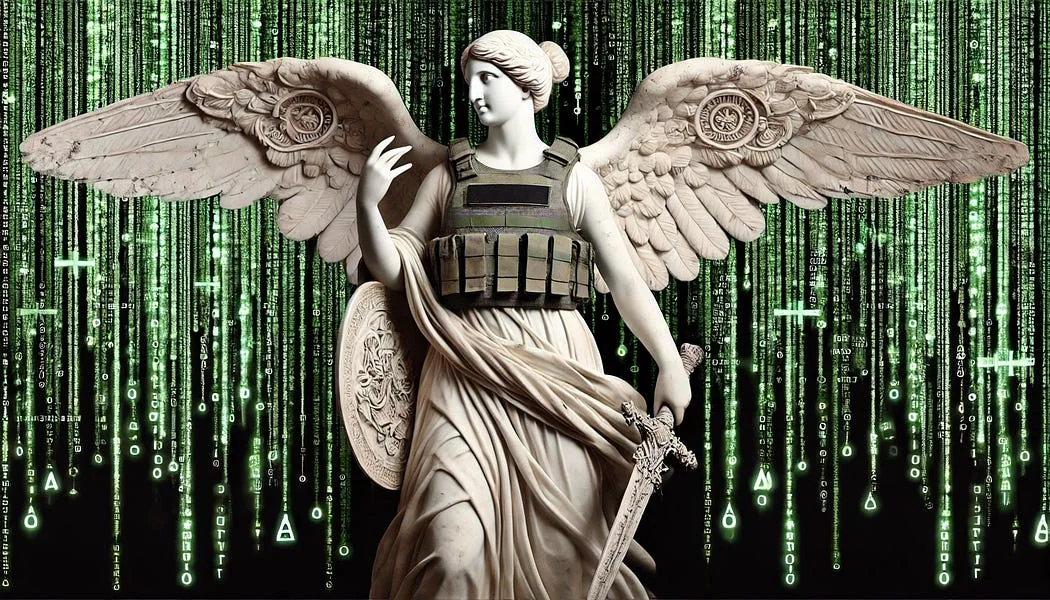
Key Takeaways:
- AI risk management is evolving, but still lacks clear enforcement mechanisms. Strategies like defence in depth, risk thresholds, and if-then commitments are promising but hard to regulate.
- Cyber and biosecurity risks are actively being researched, but military risks remain under-discussed. The development of AI-powered lethal weapons and cyberwarfare tools is accelerating with little global oversight.
- The global AI safety community must confront the reality of AI-driven warfare. Ignoring the military applications of AI does not make them less dangerous — it makes them more so.
There is a very real chance that AI could become the most powerful weapon humanity has ever created, we, in the AI sector, need to stop counting the ‘R’s” in the word strawberry or discussing what happens if language models are doing all our homework and demand that governments apply strict guidelines to automated -machine learning- driven warfare.
Thanks for Reading,
Kai Bergin