If there’s one thing I love doing, its learning. When everything in the fatty grey lump of tissue, that I lovingly call my brain, is working as it should, and the optimal level of caffeine has been added, I can happily process information into new behaviours, skills or knowledge. Whether anything I’ve learnt actually sticks depends on all kinds of internal and external factors, but it’s a moment of cognitive beauty, and one that the entire tech sector is desperately trying to synthesise.
So, in this random moment of musing, I’ll:
1) Capture the modern definition and study of human learning.
2) Introduce the foundations of the non-biological variant.
3) Share some of the latest studies of AI and learning.
Along the way I’ll also add some cutting-edge academic research and tech. Who knows? Maybe your lumps of brain matter will enjoy this meta- process of learning about learning as much as I enjoyed writing it.
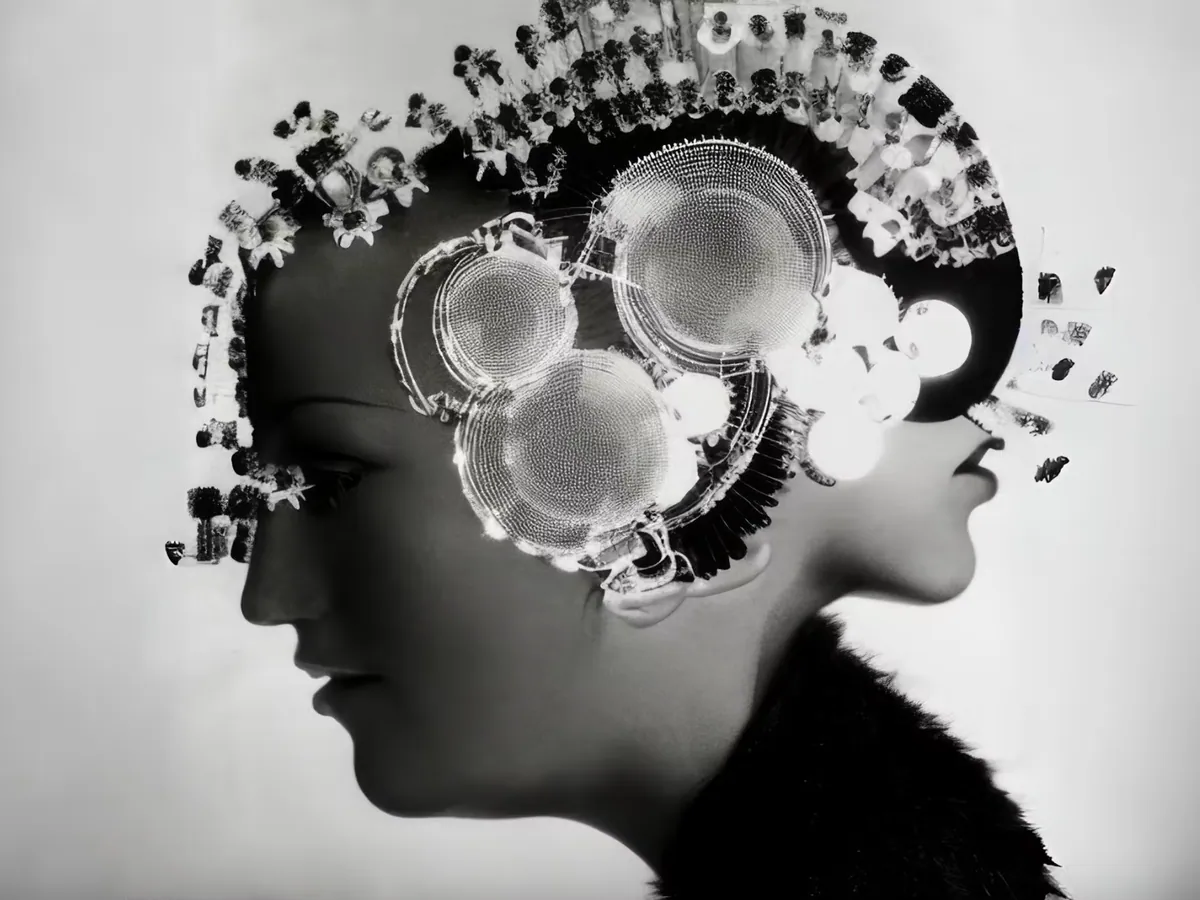
All the artwork here is by the amazing Brendan Dawes: https://superrare.com/brendandawes
Let’s start by saying that learning isn’t a singular action. It’s a ridiculously complicated process of:
- Interaction and adaption with our environment;
- Acquisition of new skills, behaviors and knowledge;
- Resulting in change to a system with the new or “learned”.
In my humble opinion, it’s not an overstatement to say: Learning is the most beautiful lens to view the world through, because it fundamentally alters perception, and through perceptions, action and interaction.
The only problem with defining the biological process of learning is that it isn’t just a singular cognitive function of an entity. It’s a process that occurs on multiple levels, in parallel:
- Our bodies component parts all have an inherent ability to learn; Whether it’s our immune system, our organs, muscles or bones, they are all like individual classrooms of learning and adaption to the challenges we face.
- Our DNA has a software layer built around it that changes the system, sometimes over generations or decades depending on what it has learnt.
- Viruses are even cooler; these ancient pathogens learn and adapt on the fly, they can also scale this learning process up to system level behaviours, like: sneezing, to help them hop over to to a new host. (a simplification of many, many amazing learning-like behaviours)
These are just a few “rapid fire” examples, but multiply these levels of learning over multiple entities in an environment filled with biological life and this (already complicated) process scales in all kinds of freakish directions.
In a recent study (2022) psychologists Jan De Houwer and Sean Hughes wrote a fascinating paper that took the entity out of the equation and suggested
“We define learning as changes in the way a system responds to its environment -- that is, as learned behavior.” (Source)
I liked this way of framing it because it scales nicely and allows us to zoom in or out without pretending the biological complexity isnt there.
AI Side note: When you hear qualified critics of current AI systems intelligence like Dr. Yann LeCun talking about how Large Language Models are not intelligent, this is the lens he is viewing it through. The pre trained model (you know, the P and T in the “GPT”) is just a giant information retrieval system. LeCun argues that it’s impossible for the LLM to interact with a real environment, which in turn discounts learning and therefore real intelligence.
Here's a great interview where he expands on this:
In much the same way as a language model presents an illusion of intelligence, my definition of learning is an illusion of understanding. To really understand learning we need to look into the mechanics of the process. Fortunately for me (and you as a reader), smarter people than myself are studying this process and its been catagorised into:
Behaviorism,
This is world of Pavlov and Skinner, it’s the granddaddy of learning studies and its all about conditioning. Just wash, rinse and repeat and eventually it sticks. As someone who has spent years learning how to play music instruments, I can confirm it works. Conditioning also introduces the concept of rewards and punishment. Skinner showed that learning followed by rewards led to repeated positive outcomes. At a high level this has been directly translated into modern AI and the carrot and stick approach is an inherent part of training these systems before they are deployed. Reward good outcomes and ruthlessly punish wrong answers until the AI can model and recognize patterns towards good outcomes.
Cognitivism:
We continue down the line to the next mechanical explanation. Cognitivism suggests that learning is active information processing. It’s all about encoding, storing and representing. It’s an active and conscious mental process that requires concentration, memory and attention. From this approach the idea of attention and cognitive load arise. Just think of all those cool techniques you learnt at school, like: mind maps, memory hacks and study tricks, they are all part of this school of thought. Here we again see a direct translation to the core concepts of modern AI, the terms used in cognitivism have almost and identical meaning in the study and mechanics of AI, and there’s a good reason for that, remember this is a field of study that is actively attempting to simulate the human process of learning.
Constructivism:
This is a way of seeing learning as construction. Learning is something that is an incremental process where new experiences are added to existing mental frameworks that develop as we grow older. The system learning isnt a blank slate in this concept. A simple example would be a young child seeing an exotic bird at the zoo, even though the child has never been to the Amazon he or she recognises that it’s a bird, because it already has a mental representation of what a bird is (you know..wings, beak, feathers etc etc). In the constructivist concept of learning interaction is king and memory (long and short term) plays a key role.
And finally Social learning:
Where learning happens through observation and immitation. During our lives we are constantly looking at how parents, teachers, friends and family perform tasks and we are learning the whole time. This process of modelling behaviour is closely related to AI systems although we perform this in a much richer and more complicated form.
I’m not going to pretend that I understand the neurological processes at play here, but at a high level:
Attention is crucial. We process much more input than is necesarry or relevant, there’s just a lot going on at any given moment and we don’t need it all. So we have a neurological “zoom in and filter” process of paying attention.
Our emotions also play a key role in our learning process, pleasurable emotions act as a reward mechanism, which stimulates learning (just like Skinner and Co described). The flip side of this is that stress or a lack of sleep has a negative effect on our brains reward mechanisms. Another important process that psychologists and neurologists agree on is motivation, a motivated person learns many times more effectively, which in turn is why teachers, employers and parents spend so much time and energy trying to motivate us to learn.
There have been some recent breakthroughs in understanding learning, like:
Glial Cells Storing Memories (2024): For decades, neurons took center stage in neurological learning research. A breakthrough Nature study in 2024 by scientists at Baylor College of Medicine revealed that astrocytes, star-shaped glial cells previously thought to play only a support role, actively participate in memory storage and retrieval. This was a striking paradigm shift because it showed that the brain cells traditionally seen as mere support “glue” are in fact integral to the learning process.
Multiple Learning Rules in the Brain (2025): A long-standing mystery in neuroscience is how the brain’s billions of synapses know how to adjust during learning, often termed the “credit assignment problem.” In April 2025, a study published in Science (by a University of California San Diego team) made a significant breakthrough: it found that individual neurons can follow multiple learning rules simultaneously. This helps explain how complex learning is possible without causing instability in neural networks. Neuroscientists hailed this as a “breakthrough” because it provides a more nuanced picture of plasticity and could inspire more sophisticated artificial intelligence algorithms that mimic the brain’s multi-rule learning approach
AI Systems and Learning:
An AI system learns through data and feedback. What do I mean by this? Since this is an article about learning I’ll skip a deep dive on the technology and just take you through the foundational concepts of how an AI system learns.
These are the classics:
Supervised learning: The AI model is trained on labeled data, and the AI system and engineers evaluate its accuracy based on these labels. Let’s imagine we have built an AI system to sort through a massive image library and fish out only photos of dogs. In a supervised learning system all the photos in that library have been labelled so we can train the AI system really directly, a photo with “dog” as a label is positive (1) and one without this label is negative (0) and anything in between is something that might look like a dog but isn’t one (a croissant for example might score 0.8). This learning process has also been the focus of many AI ethics discussions, where human data labelers are tasked with the thankless and mind-numbing job of tagging massive data sets. (Thankfully the internet is now full of prelabelled and organized data sets these days, so “Thankyou AI boom”)
Unsupervised learning. In this form the data has no labels, and the AI model has to find patterns, structures and groupings in the input on its own. Here the AI system is looking for underlying information that isn’t immediately evident. This kind of learning is often used with massive datasets, where there is no single right answer. Going through millions of bank transactions for example and finding patterns based on dates and locations. This kind of learning system is fantastic for exploratory analysis.
Reinforcement Learning: Here’s where Skinner and co. come back into play and an AI agent learns through feedback, the AI’s goal is to maximize its reward through trial and error. You see this form of learning happening with AI learning how to play games, in robotics and in self driving cars. In a nutshell: There is a separate reward system (it could also be a person) that is providing feedback to the learning system in the form of a reward score, after many attempts the learning system starts to figure out what causes the reward system’s scoring to increase or decrease and follows those pathways.
I’ve written before on the underlying concepts of how a neural network learns, so I’ll skip it here for the sake of the reader (and writer). I’ll just briefly describe one of the core concepts or the “training loop” that forms the spinal column of machine learning.
The nuts and bolts of learning for an AI system is an iterative process of trial and error guided by a loss function (also called a cost function) that measures how wrong the network’s predictions are. Again I’ll just go high level and use the Dog photo example again:
| Step | What happens | Tiny dog example |
| 1 Feed Forward | The picture’s pixel values move through all layers to produce a guess. | The network sees the photo → outputs class probabilities:dog 0.30, cat 0.60, car 0.10. |
| 2 Loss Calculation | A loss function measures the gap between the guess and the truth. | True label = dog (probability 1.0).Cross-entropy loss = − log(0.30) ≈ 1.20 → a sizable error because 0.30 ≪ 1.0. |
| 3 Back-propagation | The error signal is sent backward to find how each weight affected the loss. | Working from the output layer to the first layer, the network computes gradients showing which connections lowered dog probability and by how much. |
| 4 Gradient Descent (weight update) | Each weight is nudged in the direction that makes the loss smaller. | Weights that suppressed “dog” are decreased; weights that supported “dog” are increased. After the update the same image might yield dog 0.45, cat 0.45, car 0.10—an immediate improvement. |
This cycle of learning is repeated many times until the network figures out how to get the probability of the dog as high as possible for dog photos and as low as possible for everything else.
So this is the foundation, and on the surface it may not seem particularly human like, but if you take the key concepts I shared from the human learning process you’ll see them echoed in each of these steps. AI is inspecting and adapting itself and finally settles on a new changed and learned state where it is able to process and predict unstructured, unsorted or new information.

How are we progressing in our study of how AI learns in 2025? Here are two fascinating studies and I highly recommend them both, if you aren’t academically orientated you can find many YouTube videos or LinkedIn articles to explain these simply. Meta’s study suggests a new pathway of learning and Anthropic’s opens the hood on the current wave of AI models and allows us to look within the machine room of the LLM learning process.
Meta (2024) – Learning at the Level of Concepts: Researchers at Meta have proposed new ways to think about training AI at a higher level of abstraction. In late 2024, Meta’s AI research team introduced Large Concept Models (LCMs), an experimental architecture that tries to model language at the level of whole concepts rather than just individual words or tokens arxiv.org. This is a big shift from the usual approach and suggests an alternative path for AI learning: instead of building meaning step by step from tiny pieces (characters or words), the model works with bigger chunks of meaning at once.
Anthropic (2024) – This company headlines in 2024 by achieving the first detailed interpretability analysis of a state-of-the-art large language model. In a report titled “Mapping the Mind of a Large Language Model,” published May 2024, Anthropic researchers identified how millions of concepts are represented inside Claude, one of their large language models anthropic.com. This was a breakthrough because it provided a glimpse into what a trained LLM knows and how that knowledge is organized internally. The team used a technique to find emergent features in the neural network’s activations. A “feature” here means a pattern of neuron activity that consistently represents some concept or trait. They discovered an astonishing range of human interpretable features in the model’s layers everything from concrete entities like specific cities (e.g. San Francisco), famous individuals (e.g. Rosalind Franklin), or chemical elements, to more abstract themes like “a bug in code” or “the concept of an inner conflict”. This study is an amazing read and shows that these language models (in contrast to what critics are saying) build internal representations, which seem like synthetic versions of human learning.
Phew ! It was a long read and an even longer write, I hope you’ve enjoyed and I hope even more that you have learned something from this article. If you have any comments or feedback just reach out to me.
Thanks for reading,
Kai
Robert